Fired After Taking Medical Leave?

Our Chicago medical leave lawyer at the Law Office of Josh McCann answers, Were You Fired From Your Job After Taking Medical Leave?

Coming back from medical leave should not mean losing your job. Still, some employees in Chicago return to find their position gone, their performance questioned, or are told the company cannot keep them. Whether this is legal depends on the reason for the leave, which laws apply, what the employer knew about your medical condition, and the true reason for the firing. 

Both federal and Illinois laws offer several protections for employees who need time off for a serious health condition or disability. When we review these cases, we look past the termination letter and consider the timing, communications, work history, and how the employer acted before and after the leave.

The Family And Medical Leave Act Protects Eligible Employees

The federal Family and Medical Leave Act, commonly called the FMLA, is one of the most important protections for employees who need medical leave. Under 29 U.S.C. § 2612, eligible employees may take up to 12 workweeks of protected leave during a 12-month period for qualifying reasons, including a serious health condition that makes the employee unable to perform the functions of the job.

Not every employee or employer is covered. Generally, a private employer must have at least 50 employees for the FMLA to apply. An employee ordinarily must have worked for the employer for at least 12 months, completed at least 1,250 hours of service during the preceding 12 months, and work at a location where the employer has at least 50 employees within 75 miles. 

FMLA leave is usually unpaid, but sometimes paid leave can be used at the same time. The most important part is that FMLA leave protects your job.

Under 29 U.S.C. § 2614, an eligible employee returning from protected FMLA leave generally has the right to return to the same position or an equivalent position with equivalent pay, benefits, and other employment terms. 

This does not mean an employer can never fire someone who is on FMLA leave. Taking leave does not give an employee more job security than they would have had otherwise. For example, if there is a real company-wide layoff, an employee on leave could still lose their job if the employer can show the layoff would have happened anyway. However, an employer cannot legally fire someone just because they used their FMLA rights.

FMLA Interference And Retaliation Can Lead To Legal Claims

Federal law addresses both interference with FMLA rights and retaliation for exercising those rights. Under 29 U.S.C. § 2615, an employer may not interfere with, restrain, or deny the exercise of FMLA rights. Employers also cannot discriminate against employees for using protected FMLA leave.

The U.S. Department of Labor specifically states that employers may not punish, suspend, threaten, discriminate against, or fire an employee because the employee requested or used FMLA leave. 

Interference can take many forms. An employer might refuse qualifying leave, improperly count protected absences under an attendance policy, discourage an employee from requesting leave, or refuse reinstatement when the employee is legally entitled to return.

Retaliation can look different. An employee might get FMLA leave but then be treated badly because the employer was unhappy about the time off. For example, a sudden bad review, demotion, fewer hours, a worse assignment, discipline, or being fired soon after taking leave can all be signs of retaliation.

Timing is important, but it is not the only thing that matters. We look at what managers said, when they made their decisions, if company rules were followed the same way for everyone, and if the employer’s reason matches your work record.

The ADA May Protect Employees Who Need Additional Medical Leave

The FMLA is not the only federal law that matters. A medical condition may also qualify as a disability under the Americans with Disabilities Act.

Title I of the ADA, including 42 U.S.C. § 12112, prohibits covered employers from discriminating against qualified individuals because of disability and requires reasonable accommodation when appropriate, unless the accommodation would impose an undue hardship.

Medical leave itself can sometimes be a reasonable accommodation.

This is especially important if an employee has used up all their FMLA leave or was never eligible for it. Just because someone has used all 12 weeks of FMLA leave does not mean the employer can fire them without also thinking about their duties under the ADA.

The Equal Employment Opportunity Commission explains that an employer may sometimes be required to provide additional unpaid leave as a reasonable accommodation when it would enable an employee with a disability to return to work and would not impose an undue hardship on the employer. 

This does not mean employees have a right to unlimited or never-ending leave. What matters are the details, like how much extra time is needed, if there is a planned return date, what the job involves, and how the absence affects the company.

Employers May Need To Discuss Reasonable Accommodations Before Firing Someone

A common problem occurs when an employee approaches the end of medical leave but cannot return without restrictions. Perhaps the employee needs several additional weeks to recover from surgery. Another employee may be medically cleared to return but needs temporary lifting restrictions, periodic breaks, a modified schedule, or another workplace adjustment.

An employer covered by the ADA should not treat these situations as a resignation or a reason to fire someone without further thought. If an employee asks for something because of a medical condition, the employer may need to consider reasonable changes and talk with the employee about possible solutions.

The EEOC cautions employers against rigid maximum-leave policies that result in automatic termination without considering whether additional leave may constitute a reasonable accommodation. It also states that requiring an employee to be completely healed or to return without any restrictions may violate the ADA when the employee could perform the essential functions of the position with a reasonable accommodation. 

When we investigate a termination, we therefore examine whether the employee requested additional time or workplace restrictions, how the employer responded, and whether alternatives were meaningfully considered before the firing occurred.

Illinois Law Provides Additional Protection Against Disability Discrimination

Employees in Chicago may also have rights under the Illinois Human Rights Act. The Illinois Human Rights Act, 775 ILCS 5/1-102 and 775 ILCS 5/2-102, prohibits unlawful employment discrimination based on protected characteristics that include physical and mental disability. Illinois law makes it a civil rights violation for a covered employer to take prohibited employment action, including discharge or discipline, because of unlawful discrimination. 

Illinois regulations also address reasonable accommodation for employees with disabilities. The state’s disability discrimination regulations implementing the Illinois Human Rights Act specifically address reasonable accommodation in employment. 

These protections can matter when an employee’s medical leave is connected to a qualifying physical or mental disability. A termination described by the employer as an attendance issue, inability to return immediately, or operational necessity may need closer examination if disability discrimination played a role.

Federal and Illinois claims may overlap, but they are not necessarily identical. That is why we evaluate all potentially applicable laws rather than assuming the FMLA is the only source of protection.

Illinois Paid Leave Law May Also Affect Some Terminations

Illinois employees may also have rights under the Illinois Paid Leave for All Workers Act, 820 ILCS 192/1 et seq., depending on where they work and whether the Act applies to their employment.

The law generally provides covered Illinois employees with paid leave that may be used for any reason. Of particular importance in a termination case, 820 ILCS 192/25 prohibits employers from taking adverse action against employees because they exercise or attempt to exercise rights under the Act. Employers also may not use protected paid leave as a negative factor in disciplinary and other employment decisions. 

Employees working within Chicago may also be subject to local leave requirements, so the exact workplace location and employer policies should be reviewed.

A termination involving medical leave can therefore involve several laws at the same time. We determine which protections actually apply based on the employee’s workplace, employer size, length of employment, reason for leave, and medical circumstances.

Warning Signs That A Medical Leave Termination May Be Unlawful

Employers rarely state openly that they are terminating someone because the employee became ill or took protected leave. We usually have to examine the surrounding facts.

We pay close attention when a worker had positive evaluations before requesting leave but suddenly developed alleged performance problems afterward. The same is true when a supervisor complains about the inconvenience of an employee’s medical absences, pressures the employee to return early, repeatedly questions whether leave is truly necessary, or tells the employee that the company needs someone who is “more reliable.”

Other concerns arise when an employer fills the employee’s position permanently during protected leave, applies attendance rules to protected absences, refuses to discuss a medically necessary accommodation, or terminates an employee almost immediately after the employee requests additional medically necessary leave.

None of these facts automatically proves a violation. They can, however, become important evidence when combined with emails, text messages, performance reviews, attendance records, personnel documents, medical certifications, and testimony from coworkers or supervisors.

Contact Our Chicago Employment Law Attorney About A Medical Leave Termination

Losing a job after dealing with a serious medical condition can create financial pressure at the same time you are trying to recover. If the termination occurred during medical leave, immediately after your return, or after you requested additional leave or workplace accommodations, we can examine whether your employer violated federal or Illinois employment law.

At the Law Office of Josh McCann, we represent employees in Chicago employment disputes involving FMLA retaliation, medical leave, disability discrimination, reasonable accommodations, wrongful termination, and related workplace claims. We review the chronology carefully because the circumstances surrounding a termination often reveal more than the employer’s official explanation.

If you were fired after taking medical leave and want to understand your rights, call our Chicago medical leave lawyer at the Law Office of Josh McCann at (847) 450-1103 to receive your free consultation.
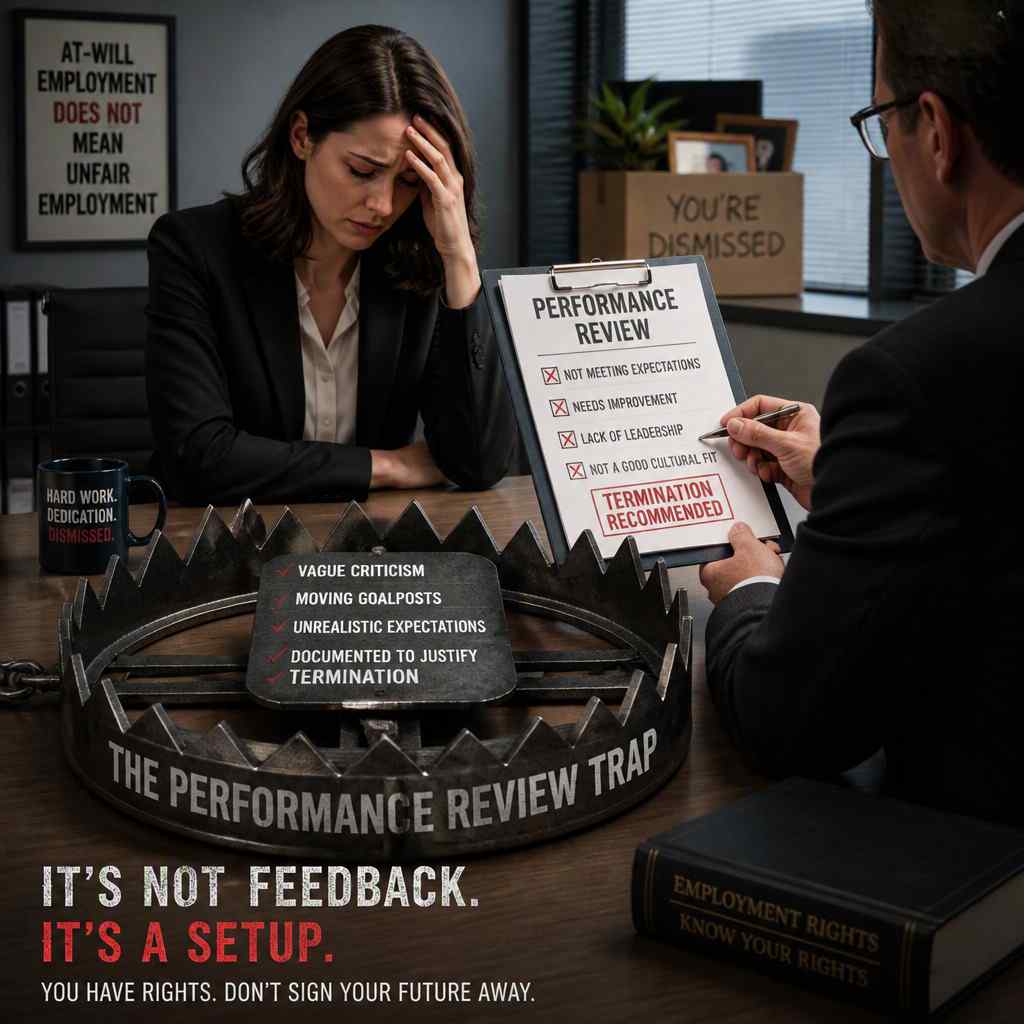
The “Performance Review” Trap

Our The “Performance Review” Trap and How A Sudden Negative Review Can Precede A Wrongful Termination.

How A Sudden Negative Review Can Precede A Wrongful Termination

Getting a negative performance review can feel like criticism, but sometimes it means something more serious. We often see cases where an employee with years of good reviews suddenly starts getting written warnings, poor ratings, or unclear criticism, even though their work hasn’t changed. This shift is especially important if it happens after the employee files a discrimination complaint, asks for a medical accommodation, takes protected leave, reports illegal conduct, or does something else protected by law. Employers can set standards, evaluate performance, and fire employees for real performance issues. The legal problem comes up when a review is changed, exaggerated, or created just to justify firing someone for an unlawful reason.

Why A Performance Review Can Matter In A Wrongful Termination Case

Illinois generally follows the employment-at-will doctrine, which means many employees can be terminated for a lawful reason or, in some circumstances, without a stated reason. At-will employment does not give an employer permission to fire someone for an unlawful reason.

This difference is very important when we look at sudden changes in performance records.

An employer may say that an employee was terminated because of missed goals, poor communication, attendance issues, or failure to meet expectations. If those concerns are genuine and consistently documented, the employer may have a legitimate basis for its decision.

But if the record tells a different story, the performance explanation deserves closer scrutiny.

We look at whether the employee previously received positive reviews, bonuses, promotions, increased responsibilities, raises, or praise from supervisors. We also examine when the criticism began, who initiated it, whether the standards changed, and whether comparable employees were treated differently.

A performance review can become important evidence because it may show either a legitimate business reason for termination or an attempt to manufacture one.

When A Negative Review May Be Evidence Of Discrimination

Federal and Illinois laws prohibit employment decisions based on certain protected characteristics. Title VII of the Civil Rights Act of 1964 makes it unlawful for a covered employer to discharge or otherwise discriminate against an employee because of race, color, religion, sex, or national origin. The law is codified at 42 U.S.C. § 2000e-2.

The Americans with Disabilities Act, 42 U.S.C. § 12112, prohibits covered employers from discriminating against qualified individuals because of disability in hiring, advancement, discharge, compensation, and other terms and conditions of employment. It also addresses reasonable accommodation obligations.

The Age Discrimination in Employment Act, 29 U.S.C. § 623, prohibits covered employers from discharging or otherwise discriminating against protected workers because of age.

Illinois provides additional protection through the Illinois Human Rights Act. Under 775 ILCS 5/2-102, employers may not discriminate in discharge, discipline, promotion, hiring, or other employment conditions based on unlawful discrimination and other protected grounds recognized by Illinois law.

A negative review becomes important if performance concerns start only after a protected characteristic, like age or disability, becomes part of the employer’s decision.

For example, an older employee may receive years of strong evaluations and then suddenly be described as unable to “keep up” shortly before being replaced by a substantially younger worker. An employee who discloses a disability and requests accommodation may suddenly be rated poorly for issues that were never raised previously. A female employee may be criticized for conduct that male employees routinely engage in without consequences. None of these facts alone proves discrimination. But when combined with other evidence, they can raise real doubts about the employer’s explanation.

The Paper Trail Can Be Used To Create A Reason For Termination

One of the most important issues we examine is whether the employer began building a disciplinary record only after deciding that it wanted the employee gone.

The sequence can be revealing.

An employee may have satisfactory reviews for years. A new supervisor arrives, a complaint is made, leave is requested, or another protected issue arises. Shortly afterward, minor incidents begin appearing in writing. Informal conversations suddenly become formal warnings. Ordinary mistakes that previously drew little attention are described as major failures.

Eventually, the employer points to the collection of warnings and says the termination was the predictable result of poor performance.

The question is whether the documentation reflects what actually happened.

We compare the written review with emails, sales data, productivity records, customer comments, prior evaluations, attendance records, internal messages, bonus history, and how other employees were treated.

If the performance review is inconsistent with objective evidence, that inconsistency can matter.

Retaliation Can Appear First As A Performance Problem

Retaliation cases frequently involve a change in how an employee is treated after protected activity. Federal equal employment opportunity laws prohibit retaliation when an employee asserts rights protected by those laws. The Equal Employment Opportunity Commission specifically recognizes that retaliation can include a reprimand, increased scrutiny, or a performance evaluation that is lower than it should be when the action is taken because of protected EEO activity.

That does not mean employees become immune from legitimate discipline after making a complaint. An employer can still address genuine performance or misconduct issues. The legal question is whether the negative action occurred because of the protected activity rather than because of legitimate performance concerns.

We therefore look carefully at timing.

Suppose an employee reports racial discrimination to human resources and receives the worst performance review of a ten-year career three weeks later. Or an employee complains about sexual harassment and suddenly receives heightened scrutiny from the same manager implicated in the complaint.

Timing alone may not establish retaliation, but it can become significant when combined with inconsistent explanations, unusual discipline, or evidence that similarly situated employees were treated differently.

Illinois Law Also Prohibits Retaliation

The Illinois Human Rights Act contains its own retaliation protections. Under 775 ILCS 5/6-101, retaliation is prohibited when a person has opposed or reported conduct reasonably and in good faith believed to violate the Act, participated in an investigation or proceeding, or requested or attempted to request a reasonable accommodation.

This means a negative performance review may deserve close attention when it follows an internal discrimination complaint, participation in a human rights investigation, or an accommodation request.

The central issue is not whether the review was unpleasant. Employment law does not require supervisors to be fair, pleasant, or even particularly good managers in every circumstance.

What matters is whether an unlawful motive influenced the review, discipline, or eventual termination.

Whistleblowing Can Trigger A Different Kind Of Performance Review Trap

Not every retaliation case involves discrimination. An employee may report fraud, regulatory violations, unsafe practices, wage issues, financial misconduct, or another activity believed to violate state or federal law. Soon afterward, management may begin documenting supposed performance shortcomings.

The Illinois Whistleblower Act provides important protections in certain situations.

Under 740 ILCS 174/15, an employer may not retaliate against an employee for certain good-faith disclosures involving conduct the employee believes violates state or federal law, rule, or regulation, or presents a substantial and specific danger to employees, public health, or safety. Current Illinois law also protects qualifying internal disclosures to supervisors and certain organizational officials.

Section 20 of the Act also prohibits retaliation against an employee who refuses to participate in conduct the employee has a good-faith belief would violate state or federal law.

A suspicious performance review appearing shortly after protected whistleblowing activity can therefore become part of a retaliation analysis.

Comparing Your Review With Your Actual Work Record

One of the first things we want to know is whether the negative review matches the employee’s actual performance. Objective records can be particularly useful.

If the review says sales declined, what do the sales numbers show? If management claims deadlines were repeatedly missed, are there emails showing assignments were completed on time? If the employee supposedly received numerous complaints, where are those complaints? If attendance suddenly becomes the justification, does the attendance record support the claim?

We also compare the review with earlier evaluations.

A dramatic change can be important when there is no corresponding change in duties or performance. An employee who was rated highly six months earlier should understand why the employer now describes the same work as unacceptable.

Employers are permitted to change standards and demand improvement. They should not, however, use invented standards selectively as a cover for prohibited discrimination or retaliation.

Different Treatment Of Other Employees Can Expose Pretext

Comparative evidence can also matter. Suppose an employer claims that an employee was terminated for making three errors. If employees outside the protected group made similar or more serious errors and were not disciplined, that disparity may raise questions.

The details matter. The employees being compared should generally have similar responsibilities, decision-makers, circumstances, and conduct before a meaningful comparison can be made.

Still, inconsistent enforcement is something we examine closely. An employer’s rule may look neutral on paper but become suspicious when it is enforced aggressively against one employee while being ignored for others. That can be particularly important when a performance improvement plan, written warning, or final review becomes the immediate basis for termination.

A Performance Improvement Plan May Be The Final Step Before Termination

A performance improvement plan, commonly called a PIP, is sometimes a legitimate attempt to correct performance problems. In other situations, it may be the last stage of a decision that has already been made.

We advise employees not to assume that every PIP is a sham. At the same time, they should take it seriously.

Read the document carefully. Determine whether the goals are measurable. Compare them with your job description and past expectations. Keep records showing your efforts to satisfy the requirements. Preserve emails demonstrating completed work and communications with supervisors.

If the goals are impossible, constantly changing, or materially different from standards applied to other employees, document those facts carefully. The way an employer administers a PIP can later become just as important as the PIP itself.

Contact The Law Office Of Josh McCann About A Wrongful Termination

If years of positive employment history were suddenly replaced by negative evaluations, disciplinary warnings, or a performance improvement plan shortly before your termination, we can examine whether the stated performance concerns tell the whole story.

At the Law Office of Josh McCann, we represent employees in Chicago employment disputes involving wrongful termination, discrimination, retaliation, and related workplace claims. We review the timeline, performance records, internal complaints, communications, and the employer’s stated reason for termination to determine whether federal or Illinois employment protections may apply.

To receive your free consultation, contact our Chicago wrongful termination lawyer at the Law Office of Josh McCann when you call (847) 450-1103.

Was I Fired Because Of Workplace Discrimination?

Our Chicago employment discrimination attorney at the Law Office of Josh McCann answer the question, Was I Fired Because Of Workplace Discrimination?

Losing your job can make you wonder if your employer’s explanation is the real reason. Companies often say a firing happened because of poor performance, restructuring, attendance issues, or breaking a workplace rule. Sometimes these reasons are valid, but sometimes they hide discrimination based on a protected characteristic. Employers almost never admit that bias played a role, so these cases usually rely on the facts, changing stories, unfair discipline, and how similar employees were treated. We help employees review their work history to see if illegal discrimination may have been a factor in their firing.

Not Every Unfair Termination Is Illegal

In Illinois, most jobs are considered at-will. This means an employer can usually fire someone for a bad reason, an unfair reason, or no reason at all, as long as it does not break a contract, law, or public policy.

Discrimination at work is different. Both federal and Illinois laws make it illegal for employers to fire someone because of certain protected traits. To win a claim, you need more than proof that your employer was harsh or made a poor decision. There must be evidence linking the firing to discrimination, retaliation, or another illegal reason.

We start by looking at what changed before you were fired. Did a new boss make biased remarks? Did expectations suddenly get tougher? Did your employer start writing up small issues they used to ignore? Were people outside your protected group treated better for doing the same things? These answers help tell the difference between a normal workplace problem and possible discrimination.

Federal Law Protects Employees From Discriminatory Discharge

Title VII of the Civil Rights Act of 1964 prohibits covered employers from discharging or otherwise discriminating against an individual because of race, color, religion, sex, or national origin. The prohibition appears in 42 U.S.C. Section 2000e-2. Federal protection against sex discrimination includes claims involving pregnancy and other forms of sex-based unequal treatment.

Other federal statutes protect additional groups. The Age Discrimination in Employment Act prohibits covered employers from firing or otherwise discriminating against workers who are at least 40 years old because of age. The governing prohibition appears in 29 U.S.C. Section 623.

The Americans with Disabilities Act prohibits covered employers from discriminating against a qualified individual on the basis of disability in hiring, discharge, compensation, advancement, training, and other employment terms. The federal prohibition appears in 42 U.S.C. Section 12112.

Different federal laws contain different definitions, employer-coverage requirements, causation standards, and procedural rules. We evaluate which statutes apply rather than treating every termination claim as legally identical.

Illinois Law Provides Broad Workplace Protections

The Illinois Human Rights Act prohibits employment discrimination based on numerous protected characteristics. These include race, color, religion, sex, national origin, ancestry, age, marital status, order of protection status, physical or mental disability, military status, sexual orientation, pregnancy, reproductive health decisions, and unfavorable military discharge. Illinois law may therefore protect an employee in circumstances that require a separate analysis from federal law. 

The Illinois Department of Human Rights explains that the Act applies to employment decisions such as firing, layoff, discipline, demotion, promotion, performance evaluations, compensation, working hours, leave, and other terms and conditions of employment.

Illinois law may also apply to employers that are not covered by a particular federal statute. 

Employer size and the nature of the claim can affect which legal protections are available. We examine both federal and state law because limiting the review to one system can cause an employee to overlook a viable claim.

Suspicious Timing May Support A Discrimination Claim

Timing does not prove discrimination by itself, but it can be important. A firing may deserve closer review when it occurs shortly after an employer learns about a pregnancy, disability, religious need, interracial relationship, gender transition, medical restriction, or another protected fact.

The same concern may arise when an older employee is terminated soon after management discusses bringing in younger workers or reducing payroll costs. A termination shortly after an employee returns from disability-related leave may also warrant investigation, particularly when the employer previously praised the employee’s performance.

We compare the timing of the termination with evaluations, emails, attendance records, accommodation requests, management meetings, disciplinary notices, and changes in job duties. A timeline can reveal whether the employer’s criticism existed before the protected issue arose or appeared only afterward.

Unequal Discipline Can Be Evidence Of Discrimination

One common warning sign is unequal enforcement of workplace rules. An employer may claim that you were fired for tardiness, insubordination, a customer complaint, or a policy violation while retaining employees outside your protected group who engaged in comparable or more serious conduct.

The employees being compared do not always need to have identical jobs or records, but meaningful similarities matter. Relevant questions include whether the employees had the same supervisor, violated the same rule, had similar disciplinary histories, and worked under similar conditions.

An employer may have a legitimate reason for imposing different discipline. One employee may have received prior warnings, held a safety-sensitive position, or committed a more serious offense. We review the complete context rather than relying on a superficial comparison.

Useful evidence may include disciplinary records, workplace policies, schedules, performance reviews, witness statements, internal messages, and records showing how the employer handled earlier incidents.

Changing Explanations May Suggest Pretext

An employer’s explanation for a firing should remain reasonably consistent. A company may create suspicion when a supervisor gives one reason during the termination meeting, human resources gives another reason in writing, and the employer later offers a third explanation during an agency investigation.

A false or shifting explanation may support an argument that the stated reason is pretext, meaning it is not the employer’s true reason. Pretext can also be shown when the employer cannot produce records supporting its claims, abandons its usual disciplinary process, applies a policy selectively, or relies on facts that decision-makers knew were inaccurate.

We do not assume that every inconsistency proves discrimination. People may communicate poorly, and several legitimate reasons may contribute to a decision. The issue is whether the contradictions, together with the remaining evidence, reasonably support an inference that discrimination influenced the termination.

Sudden Performance Problems May Be A Warning Sign

A history of positive evaluations followed by abrupt criticism can raise questions. This is especially true when the criticism begins after management learns of a protected characteristic, accommodation need, discrimination complaint, or anticipated leave.

Employers are allowed to change standards, replace managers, and demand improved performance. A good past record does not guarantee continued employment. However, an employer may have difficulty defending a termination when it cannot explain why documented performance changed so sharply.

We examine whether the new criticisms are supported by objective evidence. We also compare the employee’s targets, assignments, resources, deadlines, and training with those given to coworkers. Sometimes an employer creates conditions designed to make a particular employee appear unsuccessful.

Preserve performance reviews, awards, customer praise, productivity data, sales records, emails, and earlier statements about your work. These records may become difficult to obtain after access to company systems is terminated.

Retaliation Can Be Connected To A Discrimination Complaint

An employee may have a claim even when the employer disputes the underlying discrimination complaint. Title VII prohibits retaliation against an employee because the employee opposed an unlawful employment practice or participated in a discrimination charge, investigation, or hearing. The federal retaliation provision appears in 42 U.S.C. Section 2000e-3.

Protected activity may include reporting discriminatory treatment to human resources, supporting a coworker’s complaint, requesting certain disability or religious accommodations, filing an agency charge, or participating in an investigation. The activity must concern conduct that the employee reasonably understands as potentially unlawful discrimination.

Retaliation may be shown through termination, demotion, reduced hours, undesirable assignments, intensified scrutiny, or other materially harmful action. Close timing between a complaint and termination can be relevant, but we also look for evidence of management hostility, procedural irregularities, shifting reasons, and different treatment after the complaint.

Disability Discrimination May Involve Accommodation Issues

A disability-related termination may involve more than an openly biased statement. The dispute may concern whether the employee could perform the essential functions of the position with a reasonable accommodation.

Under the ADA, a qualified individual is someone who can perform the essential job functions with or without a reasonable accommodation. An employer may need to consider changes such as modified schedules, accessible equipment, job restructuring, leave, or another effective accommodation, depending on the circumstances. The ADA prohibits disability discrimination in discharge and other employment decisions under 42 U.S.C. Section 12112.

An employer does not necessarily need to remove essential job duties, accept indefinite leave, or provide an accommodation that creates an undue hardship. These cases depend heavily on job descriptions, medical information, communications between the parties, available positions, and the employer’s response to the request.

A termination may be suspicious when the employer fires an employee immediately after learning of a medical restriction without discussing possible accommodations.

Age Discrimination Can Be Hidden Behind Restructuring

Employers may reduce staff, eliminate positions, or reorganize departments for lawful business reasons. A restructuring can still be discriminatory when older employees are disproportionately selected because of age.

The ADEA protects employees who are 40 or older from termination because of age. Relevant evidence may include age-related comments, replacement by a substantially younger worker, manipulated performance rankings, patterns showing older employees were selected for layoff, or pressure to retire.

Cost concerns do not automatically establish age discrimination, even when older employees earn higher salaries. We examine whether management used salary as a genuine financial criterion or as a substitute for assumptions about age, energy, adaptability, or retirement plans.

Employees presented with severance agreements should review them carefully before signing. A release may waive legal claims, and federal law imposes specific requirements on waivers of ADEA rights by employees who are 40 or older.

Call The Law Office Of Josh McCann About A Workplace Discrimination Termination

A termination can be legally discriminatory even when the employer uses neutral language such as performance concerns, restructuring, attendance, or lack of fit. We examine whether the stated explanation matches the record, whether policies were enforced consistently, whether protected employees were treated differently, and whether retaliation followed a complaint or accommodation request.

The Law Office of Josh McCann represents employees in Chicago and surrounding communities from its office in Lisle, Illinois. The firm assists workers facing discriminatory termination, retaliation, disability-related employment disputes, unequal discipline, and other violations of federal and Illinois employment law. To receive your free consultation, contact our Chicago employment discrimination attorney at the Law Office of Josh McCann when you call (847) 450-1103

How A Chicago Employment Discrimination Lawyer Can Protect Your Rights

Our Chicago employment lawyer at Law Office of Josh McCann discusses the legal topic, How A Chicago Employment Discrimination Lawyer Can Protect Your Rights.

Employment discrimination can impact your income, reputation, health insurance, career growth, and financial security. Sometimes it is obvious, but often employers disguise it as restructuring, performance issues, attendance problems, or saying someone is not a good fit. You might see coworkers outside your protected group getting better assignments, more flexibility, higher pay, promotions, or lighter discipline. You could also experience harassment, be denied a reasonable accommodation, or face consequences after reporting unfair treatment. We help Chicago employees understand what happened, keep important evidence, meet filing deadlines, and seek remedies under federal and Illinois employment laws.


Identifying Conduct That May Constitute Employment Discrimination


Not every unfair decision at work is against the law. Federal and Illinois employment laws usually require that the negative treatment is linked to a legally protected characteristic, a protected activity, or a request for accommodation.


Title VII of the Civil Rights Act of 1964 prohibits covered employers from discriminating because of race, color, religion, sex, or national origin. The prohibition applies to hiring, termination, compensation, promotion, job assignments, discipline, and other terms or conditions of employment. Sex discrimination under federal law includes discrimination based on pregnancy and other legally protected sex-based considerations.


The Age Discrimination in Employment Act protects workers who are at least 40 years old from age-based discrimination by covered employers. The Americans with Disabilities Act protects qualified individuals with disabilities and may require reasonable workplace accommodations unless the accommodation would create an undue hardship. Federal disability protections generally apply to employers with at least 15 employees.


The Illinois Human Rights Act, 775 ILCS 5, provides additional protections against employment discrimination in Illinois. Depending on the facts, protected classifications may include race, color, religion, national origin, ancestry, age, sex, marital status, pregnancy, disability, military status, sexual orientation, citizenship status, work authorization status, and other characteristics identified by Illinois law. The Act also addresses harassment, retaliation, arrest-record issues, and certain employment practices that may fall outside or extend beyond federal coverage.

We look at the facts under all relevant laws because employer coverage, deadlines, procedures, and possible claims can vary.

Evaluating Whether An Employment Decision Was Discriminatory

Employers rarely admit to firing, demoting, or not promoting someone because of a protected characteristic. That’s why most cases need a close look at the facts and circumstances.

We may compare how the employer treated similarly situated employees. For example, an employer may claim that it terminated you for attendance problems while overlooking similar or more serious attendance issues involving other workers. A company may state that you lacked leadership experience even though it promoted someone with fewer qualifications. A supervisor may suddenly create performance criticisms shortly after learning about your pregnancy, disability, religion, age, or complaint of harassment.

Timing matters, but it is not enough by itself to prove discrimination. We also look for changing explanations, policy changes, uneven discipline, biased remarks, sudden changes in performance reviews, patterns in statistics, and attempts to replace you with someone outside your protected group.

An employment discrimination lawyer can help decide if the facts suggest the employer’s reason is not true or is missing information. We can also find evidence that might only come out during the legal process.

Preserving Evidence Before It Disappears

Workplace discrimination cases often turn on documents and communications. Evidence may include emails, text messages, performance reviews, disciplinary notices, schedules, pay records, promotion announcements, workplace policies, accommodation requests, internal complaints, and witness information.

We advise employees to preserve materials they are legally entitled to keep. You should not take confidential customer files, trade secrets, privileged communications, private medical information belonging to coworkers, or records you have no lawful authority to access.

Create a written timeline while events are still fresh. Record dates, locations, participants, statements, witnesses, and the employer’s response. Save copies of your job description, evaluations, awards, commendations, compensation records, and relevant communications.

Do not alter documents or secretly edit prior communications. Original records are usually more persuasive than reconstructed evidence. You should also avoid posting detailed accusations on social media because those statements may become evidence and may complicate an ongoing investigation.

Addressing Workplace Harassment

Harassment may violate federal or Illinois law when it is based on a protected characteristic and is sufficiently serious under the applicable legal standard. Isolated rude behavior may not always establish a legal claim, but repeated insults, threats, slurs, sexual conduct, ridicule, offensive images, unwanted touching, or interference with work can create significant legal concerns.

Harassment may come from a supervisor, coworker, customer, vendor, or another person in the workplace. The employer’s responsibility may depend on who committed the conduct, whether management knew or should have known about it, and what corrective action the employer took.

We review the employer’s reporting policy and help determine how a complaint should be made. A report should identify the conduct clearly, connect it to the protected issue when appropriate, and request effective corrective action.

Employees sometimes complain only that a supervisor is unfair or difficult. Those words may not inform the employer that discrimination or protected harassment is being reported. A carefully written complaint can create a clearer record without exaggerating the facts.

Protecting Employees Who Need Disability Accommodations

The Americans with Disabilities Act may require a covered employer to provide a reasonable accommodation to a qualified employee with a disability. An accommodation may involve changes to schedules, equipment, work methods, communication practices, leave, or other workplace conditions that enable the employee to perform essential job functions.

An employee does not always need to use the exact phrase “reasonable accommodation.” A request can arise when the employee communicates that a workplace change is needed because of a medical condition. An employer may request appropriate medical documentation when the disability or need for accommodation is not obvious.

The employer and employee should participate in a good-faith process to identify an effective accommodation. Disputes may arise when an employer delays responding, refuses to consider alternatives, imposes unnecessary medical demands, or insists that the employee accept an ineffective option.

We help employees describe their limitations and requested changes without disclosing more medical information than reasonably necessary. We also evaluate whether attendance rules, leave policies, return-to-work requirements, or job restructuring decisions may violate disability discrimination laws.

Challenging Unequal Pay, Promotion, And Assignment Decisions

Discrimination may affect compensation even when two employees have different job titles. We examine actual duties, qualifications, performance, seniority, decision-making authority, bonus criteria, commission structures, and access to profitable assignments.

Promotion claims may involve subjective selection processes. An employer may rely on terms such as leadership presence, cultural fit, communication style, or readiness without using defined standards. Subjective criteria are not automatically unlawful, but they can conceal inconsistent or biased decision-making.

We may request records showing who applied, who was interviewed, how candidates were ranked, and what qualifications the selected candidate possessed. We also examine whether the employer followed its normal posting, interview, and approval procedures.

Unequal assignments can affect future advancement as well as immediate compensation. Denial of high-profile projects, client contact, training, overtime, or supervisory experience may limit an employee’s ability to compete for promotions later.

Protecting You From Retaliation

Federal and Illinois laws generally prohibit an employer from retaliating against a worker for engaging in protected activity. Protected activity may include reporting discrimination, participating in an investigation, requesting a reasonable accommodation, supporting another employee’s complaint, or filing an administrative charge.

Retaliation can include termination, demotion, reduced hours, undesirable assignments, exclusion from meetings, threats, increased scrutiny, or other actions that could discourage a reasonable employee from asserting protected rights. Federal agencies recognize retaliation as a distinct violation, even when the underlying discrimination complaint is not ultimately proven.

The timing between a complaint and an adverse action may support a retaliation claim, but we also look for evidence of changed treatment, negative comments about the complaint, sudden discipline, unusual monitoring, and departure from established practices.

Continue performing your job professionally after making a complaint. Follow reasonable policies, retain records, and document changes in treatment. Giving an employer a legitimate basis for discipline can make a retaliation claim harder to prove.

Filing A Charge With The EEOC Or IDHR

Many employment discrimination claims require an administrative filing before a lawsuit can proceed. Federal claims commonly begin with a charge filed with the Equal Employment Opportunity Commission.

The general federal filing period is 180 days, but it may extend to 300 days when a state or local agency enforces a law prohibiting the same type of discrimination. In Illinois, many EEOC charges are subject to the 300-day period, although the correct deadline depends on the claim and circumstances.

Illinois changed its state filing period effective January 1, 2025. Most non-housing discrimination, harassment, and retaliation charges filed with the Illinois Department of Human Rights must now be filed within two years after the alleged violation. The two-year state period does not automatically extend the separate federal deadline.

Waiting can still harm the case even when time remains. Witnesses leave, messages are deleted, records are archived, and memories fade. We identify the earliest potentially applicable deadline and prepare the charge with enough factual detail to protect the client’s claims.

Negotiating A Resolution Or Preparing For Litigation

Some disputes can be resolved through an internal process, agency mediation, severance negotiation, or settlement. Others require formal litigation.

We assess whether a proposed resolution protects your financial and professional interests. Employment agreements may include confidentiality, non-disparagement, release, reference, cooperation, tax, return-of-property, and future-employment provisions. Each term can have lasting consequences.

When litigation is necessary, we may seek documents, take depositions, question decision-makers, obtain comparator evidence, and challenge the employer’s stated justification. We prepare the case around admissible evidence rather than assumptions.

Our role is also to protect you from avoidable errors. We advise you about workplace communications, social media, document preservation, job-search records, and compliance with court or agency deadlines.

Call The Law Office Of Josh McCann About Employment Discrimination

Employment discrimination can affect your livelihood and future opportunities, but you do not have to evaluate the employer’s conduct alone. We help employees understand whether workplace decisions may violate federal or Illinois law, preserve evidence, prepare internal complaints, meet administrative deadlines, respond to retaliation, and pursue appropriate legal action.

The Law Office of Josh McCann represents employees throughout Chicago from its office in Lisle, Illinois. We handle matters involving discriminatory termination, harassment, retaliation, disability accommodations, unequal treatment, promotion disputes, and other employment law concerns.

To receive your free consultation, contact our Chicago employment lawyer at the Law Office of Josh McCann when you call (847) 450-1103.

Gender Stereotyping And Workplace Discrimination In Illinois

Our Chicago discrimination lawyer at the Law Office of Josh McCann discuss Gender Stereotyping And Workplace Discrimination In Illinois.

Workplace discrimination is not always obvious. In many cases, unlawful treatment arises from assumptions about how men and women should behave, look, communicate, or perform their jobs. These assumptions, often referred to as gender stereotypes, can influence hiring decisions, promotions, disciplinary actions, compensation, and workplace culture. Employees may be denied opportunities because they do not fit a manager’s expectations regarding masculinity, femininity, caregiving roles, leadership style, appearance, or behavior. Federal and Illinois law prohibit employers from making employment decisions based on these stereotypes. When gender stereotyping affects an employee’s career, legal remedies may be available. Understanding your rights is an important step toward protecting yourself from unlawful workplace conduct.

What Is Gender Stereotyping?

Gender stereotyping occurs when an employer treats an employee differently because of assumptions about how individuals of a particular sex should act, dress, speak, or perform their job duties. These stereotypes can affect both men and women and may occur in virtually any industry.

Examples of gender stereotyping can include assumptions that women are less suited for leadership positions, beliefs that men should not take on caregiving responsibilities, criticism of employees who do not conform to traditional gender expectations, or unequal treatment based on appearance standards.

While some workplace decisions may appear subjective, employment actions motivated by gender stereotypes can violate both federal and Illinois law.

Federal Protections Against Gender Stereotyping

Title VII of the Civil Rights Act of 1964, codified at 42 U.S.C. § 2000e-2, prohibits discrimination based on sex in hiring, firing, compensation, promotions, and other terms and conditions of employment.

One of the most important cases involving gender stereotyping is Price Waterhouse v. Hopkins, 490 U.S. 228 (1989). In that case, the United States Supreme Court recognized that employment decisions based on gender stereotypes may constitute unlawful sex discrimination under Title VII.

Federal law prohibits employers from making employment decisions because an employee is perceived as too aggressive, too emotional, too masculine, too feminine, or otherwise inconsistent with traditional gender expectations. Courts have repeatedly recognized that such stereotypes can form the basis for actionable discrimination claims.

Illinois Law Provides Additional Protection

Illinois employees are protected not only by federal law but also by the Illinois Human Rights Act, 775 ILCS 5/1-101.

The Illinois Human Rights Act prohibits discrimination in employment based on sex and several other protected characteristics. Employers covered by the Act may not make hiring, promotion, compensation, discipline, or termination decisions based on unlawful stereotypes relating to gender.

Illinois law also provides avenues for employees to pursue claims through the Illinois Department of Human Rights. In many situations, state law protections work alongside federal protections to provide broader remedies and enforcement options.

Common Examples Of Gender Stereotyping In The Workplace

Gender stereotyping can take many forms. Some examples are obvious, while others are more subtle.

A female employee may be denied a promotion because decision-makers believe she lacks the personality traits they associate with leadership. A male employee may be criticized for taking parental leave because supervisors believe caregiving responsibilities should primarily belong to women. Employees may be subjected to comments about their appearance, communication style, or personality based on expectations tied to gender.

In some workplaces, women are expected to perform administrative tasks regardless of their position, while men are presumed to be better suited for management roles. These assumptions can create unequal opportunities and may support discrimination claims when they influence employment decisions.

Gender Stereotyping And Pregnancy Discrimination

Gender stereotypes frequently play a role in pregnancy-related discrimination. Federal law, through the Pregnancy Discrimination Act, 42 U.S.C. § 2000e(k), prohibits discrimination based on pregnancy, childbirth, and related medical conditions.

Employers may unlawfully assume that pregnant employees are less committed to their careers or incapable of performing certain duties. Decisions based on these assumptions can violate federal law.

Illinois law also provides protections for pregnant employees and requires reasonable accommodations in many situations. Employers cannot rely on stereotypes about pregnancy when making employment decisions.

Gender Stereotyping And LGBTQ+ Employees

The United States Supreme Court’s decision in Bostock v. Clayton County, 140 S. Ct. 1731 (2020), significantly expanded protections under Title VII by holding that discrimination based on sexual orientation or gender identity constitutes discrimination because of sex.

Many claims involving LGBTQ+ employees involve gender stereotyping. An employer may improperly react to an employee’s appearance, behavior, mannerisms, or gender expression because they do not conform to traditional expectations.

Federal and Illinois law prohibit employers from treating employees differently because of these factors.

Retaliation After Complaining About Discrimination

Employees who report gender stereotyping or workplace discrimination are protected from retaliation.

Title VII prohibits employers from retaliating against employees who oppose unlawful discrimination or participate in investigations or legal proceedings. Similarly, the Illinois Human Rights Act contains anti-retaliation provisions designed to protect workers who assert their rights.

Retaliation can include termination, demotion, reduced hours, undesirable assignments, disciplinary actions, exclusion from opportunities, or other adverse employment actions.

In some cases, retaliation claims become stronger than the underlying discrimination claims because the retaliatory conduct is easier to prove.

Building A Gender Discrimination Claim

Documentation is often critical in employment discrimination cases. Employees should preserve emails, text messages, performance reviews, disciplinary records, witness information, and other evidence that may help establish a pattern of discriminatory treatment.

Timing also matters. There are deadlines for filing complaints with administrative agencies and pursuing legal claims. Waiting too long may limit available options.

A careful review of workplace records, company policies, witness statements, and employment history can help determine whether unlawful discrimination occurred.

Why Legal Representation Matters

Employers often defend discrimination claims aggressively. They may argue that employment decisions were based on performance, business needs, or other legitimate factors rather than unlawful stereotypes.

Successfully pursuing a claim often requires gathering evidence, identifying inconsistencies in the employer’s explanations, analyzing employment records, and applying federal and state employment laws to the facts of the case.

When workplace decisions are influenced by unlawful gender stereotypes, employees deserve to understand their rights and the legal remedies that may be available.

Illegal Gender Stereotyping Frequently Asked Questions

What Is Gender Stereotyping In The Workplace?

Gender stereotyping occurs when an employer makes decisions based on assumptions about how men or women should behave, appear, communicate, or perform their job duties. These assumptions can influence hiring, promotions, discipline, compensation, and termination decisions.

Is Gender Stereotyping Illegal Under Federal Law?

Yes. Courts have recognized that employment decisions based on gender stereotypes can violate Title VII of the Civil Rights Act of 1964. Employers cannot make decisions based on assumptions about how individuals should act because of their sex.

Can Men Bring Gender Stereotyping Claims?

Yes. Gender stereotyping protections apply to both men and women. A male employee who experiences adverse treatment because he does not conform to traditional gender expectations may have a valid claim under federal and Illinois law.

What Evidence Can Help Prove A Gender Discrimination Claim?

Emails, text messages, witness statements, performance reviews, disciplinary records, company policies, and evidence showing unequal treatment can all be important. The strength of a claim often depends on the quality of the available evidence.

Are LGBTQ+ Employees Protected From Gender Stereotyping?

Yes. Federal law and Illinois law provide protections for LGBTQ+ employees. Following the Bostock decision, discrimination based on sexual orientation or gender identity is prohibited under Title VII.

Can An Employer Retaliate Against Me For Reporting Discrimination?

No. Both federal and Illinois law prohibit retaliation against employees who report discrimination, participate in investigations, or assert their legal rights. Retaliation can create a separate legal claim.

What Should I Do If I Believe I Am Being Discriminated Against?

You should preserve relevant documents, maintain records of discriminatory conduct, and seek legal guidance as soon as possible. Early action can help preserve evidence and protect your rights.

How Long Do I Have To File A Claim?

The deadline depends on the facts of the case and the agency involved. Because filing deadlines can be strict, employees should act promptly to avoid losing potential claims.

Contact Our Chicago Discrimination Attorney For A Free Consultation

Gender stereotyping can damage careers, limit opportunities, and create an unfair work environment. At Law Office of Josh McCann, we help employees understand their rights under federal and Illinois employment laws and pursue claims when unlawful discrimination occurs. We are committed to holding employers accountable and protecting workers from discriminatory treatment in the workplace.

If you believe you have experienced gender stereotyping, workplace discrimination, or retaliation, contact our Chicago discrimination lawyer at the Law Office of Josh McCann at (847) 450-1103 to receive your free consultation. Our office is located in Lisle, Illinois, and we proudly represent employees throughout Chicago and the surrounding areas.
What Counts As Age Discrimination At Work In Illinois?

Our Chicago age discrimination attorney answers the question, What Counts As Age Discrimination At Work In Illinois?

Age discrimination is still a major issue at work, even though federal and state laws forbid it. Many people work for years, only to be treated differently as they get older. Sometimes, the discrimination is clear, like being replaced by a much younger person. Other times, it shows up in hiring, promotions, layoffs, discipline, or comments that make older workers feel less valued. Knowing what counts as age discrimination matters, since many employees don’t realize something illegal is happening until it has already harmed their job, income, or reputation.

Federal and Illinois laws both ban age discrimination at work. The main federal law is the Age Discrimination in Employment Act of 1967 (ADEA), found at 29 U.S.C. § 621. The Illinois Human Rights Act, at 775 ILCS 5/1-101, also protects employees from age-based discrimination. These laws make sure that decisions about hiring, firing, and promotions are based on skills and performance, not age or stereotypes.

Understanding Age Discrimination Under Federal Law

The ADEA protects employees and applicants who are 40 years of age or older. Under 29 U.S.C. § 623, employers generally may not discriminate against qualified workers because of age regarding hiring, firing, promotions, compensation, job assignments, training opportunities, benefits, or other terms and conditions of employment.

Federal law understands that age discrimination can be hard to spot. Employers almost never say age was the reason for their decisions. Instead, discrimination may be hidden behind things like restructuring, performance issues, cultural fit, succession planning, or efforts to modernize the workforce.

The key legal question is whether age was a motivating factor in the adverse employment action. Evidence may include workplace statements, hiring patterns, disciplinary practices, internal communications, or differences in treatment between older and younger employees.

Age Discrimination Under Illinois Law

The Illinois Human Rights Act provides additional protections for employees throughout the state. Under 775 ILCS 5/2-102, employers are prohibited from discriminating against employees based on protected characteristics, including age.

Illinois law covers many parts of employment, such as recruiting, hiring, promotions, discipline, pay, benefits, and firing. Employees can file claims with the Illinois Department of Human Rights or use other legal options, depending on their situation.

The Illinois Human Rights Act is a valuable resource for workers who have faced discrimination and want to make sure employers are held responsible for breaking the law.

Common Examples Of Workplace Age Discrimination

Age discrimination can occur in many different forms. Some examples include:

  • Refusing to hire qualified applicants because they are viewed as too old.
  • Passing over older employees for promotions in favor of younger, less qualified workers.
  • Excluding older employees from training opportunities.
  • Pressuring older workers to retire.
  • Reducing responsibilities based on age-related assumptions.
  • Targeting older employees during layoffs.
  • Making negative comments about age, retirement, or perceived inability to adapt.

While not every unfair workplace action constitutes discrimination, repeated patterns of age-based treatment may support a legal claim.

Age-Related Harassment In The Workplace

Harassment based on age may also violate federal and Illinois law. Age-related jokes, insults, ridicule, stereotypes, or repeated comments about retirement can create a hostile work environment.

A single isolated remark may not always rise to the level of unlawful harassment. However, ongoing conduct that interferes with an employee’s ability to perform job duties or creates an intimidating work environment may become legally significant.

Employers have a responsibility to address workplace harassment when they know or should know that unlawful conduct is occurring.

Layoffs And Workforce Reductions

Many age discrimination claims arise during layoffs and workforce reduction programs. Employers often justify layoffs based on economic conditions, restructuring efforts, or operational changes.

Although employers may lawfully reduce their workforce, they cannot use layoffs as a pretext to remove older workers. Statistical evidence, internal communications, and workforce demographics often become important when evaluating whether age played an improper role in termination decisions.

Older employees who are disproportionately affected by layoffs may have grounds to investigate whether unlawful discrimination occurred.

Retaliation For Complaining About Age Discrimination

Federal and Illinois law also prohibit retaliation against employees who report discrimination or participate in investigations. Under the ADEA and the Illinois Human Rights Act, employers generally cannot punish employees for asserting their legal rights.

Retaliation may take many forms, including demotions, discipline, unfavorable assignments, reduced hours, termination, or other adverse actions. In some cases, retaliation claims become even stronger than the underlying discrimination allegations.

Employees should carefully document complaints and subsequent workplace actions if they believe retaliation is occurring.

Building An Age Discrimination Claim

Successful age discrimination cases often depend on evidence. Employment records, performance evaluations, disciplinary histories, emails, witness testimony, hiring decisions, and comparative treatment of younger employees may all become relevant.

Many employers attempt to justify adverse employment actions by citing performance concerns or business reasons. A thorough legal investigation often focuses on determining whether those explanations are legitimate or merely cover age-based motives.

Because employers frequently deny discriminatory intent, gathering evidence early can be critical to protecting an employee’s rights.

Why Early Legal Action Matters

Employment claims are subject to strict filing deadlines and procedural requirements. Waiting too long can jeopardize your ability to pursue legal remedies. When age discrimination is suspected, it is often important to preserve records, document workplace conduct, identify witnesses, and evaluate potential claims as early as possible. Prompt action can help protect valuable evidence and strengthen a future case.

Illinois Age Discrimination FAQs

What Age Is Protected Under Federal Age Discrimination Laws?

The Age Discrimination in Employment Act generally protects workers who are 40 years of age or older. Employees within this protected age group may pursue claims when adverse employment decisions are based on age rather than legitimate business reasons.

Can An Employer Prefer Younger Workers?

Generally, employers cannot make employment decisions based on age when doing so violates federal or Illinois law. Hiring, promotion, discipline, and termination decisions should be based on qualifications, performance, and legitimate business factors rather than age-related assumptions.

Is It Illegal For A Supervisor To Make Jokes About My Age?

Age-related jokes can be evidence of discrimination or harassment, particularly when they occur repeatedly or contribute to a hostile work environment. While a single comment may not automatically create a legal claim, ongoing conduct can become significant.

Can I Be Fired Because I Am Close To Retirement?

No employer may lawfully terminate an employee simply because the employee is approaching retirement age. Decisions based on age stereotypes or assumptions regarding retirement plans may violate federal and Illinois employment laws.

What Evidence Helps Prove Age Discrimination?

Evidence may include discriminatory comments, personnel records, emails, text messages, witness statements, statistical data, performance reviews, hiring records, and evidence showing different treatment between older and younger employees.

What If My Employer Claims The Termination Was Based On Performance?

Employers frequently defend claims by citing performance concerns. However, those explanations can be challenged if evidence shows that younger employees were treated differently, performance concerns were exaggerated, or the stated reason was not the true reason for the decision.

Can I Be Retaliated Against For Reporting Age Discrimination?

No. Both federal and Illinois laws prohibit retaliation against employees who report discrimination, participate in investigations, or assert their legal rights. Retaliation itself may create an additional legal claim.

How Long Do I Have To File An Age Discrimination Claim?

The applicable deadline depends on the specific facts, the laws involved, and the forum where the claim is filed. Because important deadlines may apply, employees should seek legal guidance as soon as possible after suspected discrimination occurs.

Call Law Office Of Josh McCann For A Free Consultation

Age discrimination can have a devastating impact on your career, financial security, and future opportunities. If you believe your employer has treated you unfairly because of your age, it is important to understand your rights and evaluate your legal options. At the Law Office of Josh McCann, we help employees investigate discrimination claims, gather evidence, hold employers accountable, and pursue the remedies available under federal and Illinois law.

If you believe you have been the victim of age discrimination in the workplace, contact our Chicago age discrimination lawyer at the Law Office of Josh McCann to receive your free consultation when you call (847) 450-1103. Our office is located in Lisle, Illinois, and we proudly represent employees throughout Chicago and the surrounding areas.

Why Waiting Too Long Can Hurt Your Illinois Discrimination Case

Our Chicago discrimination lawyer at the Law Office of Josh McCann explain why waiting too long can hurt your Illinois discrimination case.

Workplace discrimination often leaves employees feeling frustrated, uncertain, and worried about what comes next. Many people notice something is wrong but hesitate to act. Some hope things will get better on their own, while others worry about retaliation, harming work relationships, or even losing their jobs. These concerns are understandable, but waiting too long to address discrimination can cause serious legal and practical problems. Evidence might disappear, witnesses could become unavailable, deadlines may pass, and chances to protect your rights can be lost. Taking prompt action is usually one of the most important steps you can take if you experience discrimination at work.

Understanding Workplace Discrimination Under Federal And Illinois Law

Federal and Illinois laws provide important protections against workplace discrimination. At the federal level, Title VII of the Civil Rights Act of 1964 prohibits discrimination based on race, color, religion, sex, and national origin. Additional protections exist under the Americans with Disabilities Act (ADA), 42 U.S.C. § 12101, the Age Discrimination in Employment Act (ADEA), 29 U.S.C. § 621, the Pregnancy Discrimination Act, and other federal statutes.

Illinois employees are also protected by the Illinois Human Rights Act, 775 ILCS 5/1-101. This law prohibits discrimination based on numerous protected characteristics, including race, religion, national origin, sex, pregnancy, disability, age, sexual orientation, gender identity, military status, marital status, and other protected classifications. These laws offer important remedies for people who experience discrimination. However, these protections usually depend on acting within certain time limits.

Evidence Can Disappear Faster Than Many People Realize

One of the biggest risks of waiting to act is losing important evidence. Workplace discrimination cases often depend on emails, text messages, performance reviews, personnel files, disciplinary notices, internal complaints, and witness statements. As time passes, these records might be deleted, lost, or harder to find. Company policies about keeping documents can also mean records are destroyed as part of normal business.

Witnesses might leave the company, move away, retire, or just forget important details. Even people who still work there may have trouble remembering specific conversations or events after several months or years.by evidence preserved close in time to the events being challenged.

Memories Fade, And Details Become Harder To Prove

Discrimination claims often involve patterns of behavior that happen over weeks, months, or even years. While someone may remember discriminatory comments or actions clearly at first, memories naturally fade and become less reliable as time goes on.

It can become hard to remember exact dates, places, witnesses, and statements. These details are often very important in workplace discrimination cases.

Jurors, judges, agencies, and employers often trust records made when events were still fresh in someone’s mind. Notes, emails, complaints, and reports created at the time usually seem more believable than memories from years later. Writing things down right away can make your claim stronger and help keep important facts clear.

Administrative Filing Deadlines Can Eliminate Legal Claims

Federal and Illinois employment discrimination laws have strict deadlines for filing claims.

Employees who want to file claims under Title VII, the ADA, or the ADEA usually need to file a charge with the Equal Employment Opportunity Commission (EEOC) before they can sue. Missing these filing steps can mean losing your legal rights.

Similarly, the Illinois Human Rights Act contains procedures governing discrimination complaints through the Illinois Department of Human Rights (IDHR).

Many employees think they can file a claim whenever they feel ready, but discrimination laws do not work that way. If you miss a filing deadline, you may lose important legal options.

Because deadlines can vary depending on the facts and legal claims involved, early legal guidance is often critical.

Internal Complaints Do Not Always Extend Deadlines

Many employees first attempt to resolve discrimination issues through human resources departments or internal complaint procedures.

Internal complaints can be helpful and may create useful records, but employees should not assume that taking part in an internal investigation will automatically extend federal or state filing deadlines.

An employer’s investigation can take weeks or months, but legal deadlines may still be counting down during that time. If you wait for your employer to finish an internal review before getting legal advice, you might risk losing important rights.

Delays Can Make Retaliation Claims More Difficult To Prove

Federal and Illinois laws prohibit retaliation against employees who report discrimination or engage in protected activities.

Retaliation may include termination, demotion, disciplinary action, reduced hours, unfavorable assignments, or other adverse employment actions.

When retaliation occurs shortly after a complaint is made, the timing itself may provide important evidence. Courts often consider temporal proximity when evaluating retaliation claims.

If a lot of time goes by without any documentation or action, it can be harder to show the link between your protected activity and any negative job decisions.

Reporting and documenting things quickly can help keep evidence that supports your retaliation claim.

Employers Often Build A Paper Trail

When workplace disputes arise, employers frequently begin documenting performance concerns, disciplinary issues, attendance problems, or other employment matters.

Sometimes those records reflect legitimate business concerns. In other situations, employees believe the documentation is being created to justify future adverse actions.

No matter the situation, waiting can let your employer’s version of events become more established through their records and documents. Your attorney helps identify issues, preserve evidence, and evaluate whether documentation accurately reflects workplace events.

Disability Accommodation Issues Require Timely Action

Employees with disabilities may be entitled to reasonable accommodations under the Americans with Disabilities Act and the Illinois Human Rights Act.

Accommodation disputes often involve an interactive process between the employer and the employee. Delays in addressing accommodation denials, failures to engage in the interactive process, or discriminatory treatment related to disabilities can complicate a potential claim.

Medical documentation may become more difficult to obtain over time, and employment circumstances may change significantly if accommodation issues are left unresolved. Addressing these concerns promptly often provides the best opportunity to preserve relevant evidence.

Harassment Cases Often Depend On Patterns Of Conduct

Hostile work environment claims frequently involve repeated conduct occurring over an extended period. 

Discriminatory comments, offensive jokes, inappropriate messages, exclusionary behavior, or other forms of harassment may individually appear minor. However, when viewed collectively, those incidents may establish a pattern of unlawful conduct.

Waiting too long to document harassment can make it difficult to demonstrate the frequency, severity, and impact of the conduct. Maintaining records of incidents as they occur often strengthens harassment claims and provides a clearer picture of workplace conditions.

Settlement Opportunities May Be Lost

Early legal intervention sometimes creates opportunities to resolve discrimination disputes before they become more damaging.

Employers may be willing to address concerns, correct workplace issues, or engage in settlement discussions when problems are identified early. As disputes escalate, positions often become more entrenched, and resolution may become more difficult.

While not every discrimination case settles, prompt action can preserve more options and provide greater flexibility when evaluating potential resolutions.

Emotional Stress Can Affect Decision-Making

Employees facing workplace discrimination often experience significant emotional stress. Anxiety, frustration, embarrassment, anger, and uncertainty are common reactions.

Over time, ongoing stress can affect decision-making and make it harder to evaluate legal options objectively. Some employees become discouraged and decide not to pursue valid claims simply because the process feels overwhelming.

Seeking legal guidance early can provide clarity regarding available rights and potential next steps. Understanding the legal landscape often helps reduce uncertainty and allows for more informed decisions.

Why Early Legal Guidance Matters

Workplace discrimination cases are often won or lost based on evidence, timing, and preparation. Early legal involvement can help preserve documents, identify witnesses, evaluate filing deadlines, assess legal claims, and prevent avoidable mistakes.

Not every unfair workplace experience violates federal or Illinois law. However, when discrimination may be involved, waiting too long can create challenges that become increasingly difficult to overcome. A timely review of the facts often provides the strongest opportunity to protect legal rights and pursue available remedies.

Workplace Discrimination Frequently Asked Questions


How Long Can Someone Wait Before Filing A Workplace Discrimination Claim?

The answer depends on the specific facts and legal claims involved. Federal and Illinois discrimination laws contain filing deadlines that may apply long before a lawsuit is filed. Because those deadlines vary, prompt legal consultation is often important.

Can A Discrimination Case Still Be Filed If The Conduct Happened Months Ago?

Possibly. Many discrimination claims remain viable even if some time has passed. However, delays can affect evidence, witness availability, and filing deadlines. A case-specific evaluation is necessary to determine available options.

Why Is Evidence So Important In Workplace Discrimination Cases?

Evidence helps establish what occurred, when it occurred, who was involved, and whether unlawful discrimination may have played a role. Emails, text messages, personnel records, witness statements, and internal complaints frequently become important evidence.

What Happens If Witnesses Leave The Company?

Witnesses who leave a company may still provide testimony. However, locating former employees and obtaining accurate recollections often becomes more difficult as time passes.

Can Internal Human Resources Complaints Protect Legal Rights?

Internal complaints are often important, but they do not always satisfy legal filing requirements. Employees should not assume that participation in an internal investigation automatically preserves all legal claims.

Does Waiting Affect A Retaliation Claim?

Yes. Delays can make it more difficult to establish the connection between protected activities and adverse employment actions. Prompt documentation often strengthens retaliation claims.

What If An Employer Promises To Fix The Problem?

Employers sometimes promise corrective action. While those promises may be sincere, employees should remain aware of applicable legal deadlines and consider obtaining legal guidance before relying solely on internal assurances.

Can Harassment Become Harder To Prove Over Time?

Yes. Harassment claims often depend on demonstrating a pattern of conduct. Delays can make it more difficult to document incidents, identify witnesses, and establish frequency and severity.

Should Workplace Discrimination Be Documented?

Yes. Maintaining records of discriminatory comments, actions, complaints, emails, and other relevant events often strengthens a potential claim and helps preserve important evidence.

When Should An Employee Contact A Discrimination Attorney?

Legal consultation may be beneficial as soon as discrimination, harassment, retaliation, accommodation issues, or other unlawful workplace conduct is suspected. Early legal review often provides the best opportunity to protect legal rights.

Contact Law Office Of Josh McCann For Help With Illinois Discrimination Claims

Workplace discrimination can affect employment, income, professional opportunities, and long-term career goals. Waiting too long to address discrimination concerns can result in lost evidence, missed deadlines, and reduced legal options. Prompt action often provides the strongest opportunity to protect important rights under federal and Illinois law.

Law Office of Josh McCann represents employees in discrimination, retaliation, harassment, wrongful termination, disability accommodation, pregnancy discrimination, and other employment law matters throughout Chicago and surrounding communities.

To receive your free consultation, contact our Chicago discrimination lawyer at the Law Office of Josh McCann when you call (847) 450-1103. Representation is available for employees throughout Chicago from an office location in Lisle, Illinois.

Signs You Need A Lawyer For Workplace Discrimination In Illinois

Our Chicago employment attorney discusses the signs you need a lawyer for workplace discrimination.

Workplace discrimination can impact every part of your life. Your job gives you income, benefits, and stability. When discrimination happens at work, it can cause stress, uncertainty, and harm your career. Many people are unsure if what they are experiencing is illegal discrimination or just unfair treatment. Some notice a problem but wait too long to talk to a lawyer. Waiting can make it harder to protect your rights and keep important evidence. Knowing the warning signs of workplace discrimination and when to get legal help can make a big difference in your case.

Understanding Workplace Discrimination Under Illinois And Federal Law

Illinois and federal laws both ban many types of workplace discrimination. On the federal level, Title VII of the Civil Rights Act of 1964 makes it illegal to discriminate based on race, color, religion, sex, or national origin. Other federal laws, like the Americans with Disabilities Act (ADA), the Age Discrimination in Employment Act (ADEA), and the Pregnancy Discrimination Act, also offer protection.

Illinois provides additional protections through the Illinois Human Rights Act, codified at 775 ILCS 5/1-101. This law prohibits discrimination based on numerous protected characteristics, including race, color, religion, sex, sexual orientation, gender identity, age, disability, national origin, marital status, military status, pregnancy, and other protected classifications.

Not every workplace conflict rises to the level of unlawful discrimination. However, when adverse employment actions are connected to a protected characteristic, legal protections may apply.

Unequal Treatment Compared To Coworkers

One of the most common signs that legal assistance may be necessary is unequal treatment compared to similarly situated coworkers.

You might notice that promotions often go to less qualified people who are not in your protected group. Others may get better assignments, schedules, training, or face less discipline even though their performance is similar to yours.

Both Title VII and the Illinois Human Rights Act say employers usually cannot make job decisions based on protected characteristics. If you see a pattern of unfair treatment, a lawyer can help you find out if it is illegal discrimination.

Keeping records of these differences is often important if you decide to file a discrimination claim.

Repeated Discriminatory Comments Or Conduct

Discrimination is not just about hiring, promotions, or being fired. Comments and behavior at work can also be a problem under the law. If you hear repeated comments about race, religion, age, disability, national origin, gender, pregnancy, or other protected traits, it could point to a bigger issue at work. These comments might show up as jokes, stereotypes, insults, or offensive remarks that seem casual.

A single inappropriate comment may not always create a legal claim. However, repeated conduct or severe incidents can contribute to a hostile work environment under federal and Illinois law.

When discriminatory comments continue despite complaints or objections, consultation with an attorney may be appropriate.

Being Passed Over For Promotions Without Legitimate Explanations

Promotions should generally be based on qualifications, performance, experience, and legitimate business considerations.

When a qualified employee is repeatedly denied advancement opportunities while less qualified individuals receive promotions, questions regarding discrimination may arise. Employers often provide reasons for promotion decisions, but those explanations should be consistent and supported by the facts.

Under Title VII, the Illinois Human Rights Act, and other anti-discrimination laws, employment decisions based on protected characteristics may violate the law. An attorney can help evaluate promotion histories, personnel records, and other evidence to determine whether discrimination may have played a role.

Sudden Negative Performance Reviews After Positive Evaluations

Many discrimination and retaliation cases involve significant changes in performance evaluations. An employee who has consistently received positive reviews may suddenly receive negative evaluations after reporting discrimination, requesting accommodations, taking protected leave, or engaging in other protected activities.

While employers are entitled to evaluate performance honestly, unexplained shifts in evaluations may raise concerns when they coincide with protected conduct or protected status.

Performance records often become important evidence in workplace discrimination cases.

Workplace Harassment That Creates A Hostile Environment

Federal and Illinois laws prohibit certain forms of workplace harassment. Harassment may involve offensive comments, unwanted conduct, intimidation, ridicule, humiliation, or other behavior directed at an employee because of a protected characteristic. In some situations, the conduct becomes so severe or pervasive that it alters workplace conditions and creates a hostile work environment.

The Illinois Human Rights Act and Title VII both recognize hostile work environment claims under appropriate circumstances.

When harassment becomes ongoing, severe, or affects the ability to perform job duties, legal guidance may be necessary.

Disability Accommodation Requests Are Ignored

The Americans with Disabilities Act, 42 U.S.C. § 12101 et seq., and the Illinois Human Rights Act require covered employers to provide reasonable accommodations to qualified employees with disabilities unless doing so would create an undue hardship.

Problems often arise when accommodation requests are ignored, delayed, denied without explanation, or met with hostility.

Employers generally must engage in an interactive process to explore reasonable accommodations. Failure to participate in that process may create legal liability.

When accommodation requests are not being addressed appropriately, an attorney can help evaluate potential violations.

Pregnancy-Related Employment Problems

Federal and Illinois laws provide protections for pregnant employees. The Pregnancy Discrimination Act amended Title VII to prohibit discrimination based on pregnancy, childbirth, and related medical conditions. Illinois law also provides protections relating to pregnancy accommodations and pregnancy-related employment decisions.

Warning signs may include demotions, reduced hours, termination, denied promotions, or adverse treatment after an employer learns of a pregnancy.

Pregnancy-related discrimination claims often involve complex factual and legal issues that benefit from early legal review.

Retaliation After Reporting Discrimination

Many employees fear reporting discrimination because of potential retaliation. Both federal and Illinois laws prohibit retaliation against employees who report discrimination, participate in investigations, oppose unlawful conduct, or exercise protected rights.

Retaliation can take many forms. It may include termination, demotion, disciplinary action, schedule changes, reduced responsibilities, exclusion from opportunities, or hostile treatment.

Retaliation claims frequently arise even when the underlying discrimination claim remains disputed. A sudden change in treatment after making a complaint often warrants careful legal evaluation.

Termination Under Suspicious Circumstances

Termination is one of the most serious employment actions an employer can take. While Illinois generally follows the employment-at-will doctrine, employers may not terminate employees for unlawful discriminatory reasons. A termination that occurs shortly after a discrimination complaint, accommodation request, protected leave, pregnancy disclosure, or other protected activity may raise concerns.

Similarly, termination decisions affecting employees within protected groups, while others are treated differently, may warrant investigation.

A lawyer can review the circumstances surrounding a termination and determine whether discrimination may have contributed to the decision.

Internal Complaints Have Not Resolved The Problem

Many employees attempt to resolve workplace discrimination internally before seeking legal help.

Human resources departments, supervisors, and internal complaint systems sometimes address concerns effectively. In other situations, complaints are ignored, minimized, or followed by retaliation.

When internal efforts fail to correct discriminatory conduct, legal intervention may become necessary to protect employee rights.

Waiting too long after internal complaints may also create problems because administrative filing deadlines continue to apply.

Important Deadlines Can Affect Legal Rights

Workplace discrimination claims are often subject to strict deadlines. Federal claims may involve filing requirements with the Equal Employment Opportunity Commission (EEOC). Illinois claims may involve procedures through the Illinois Department of Human Rights (IDHR) and other administrative processes.

Missing important deadlines can significantly affect the ability to pursue legal remedies.

Speaking with an attorney early often helps ensure compliance with applicable filing requirements and preservation of evidence.

Why Early Legal Guidance Matters

Many workplace discrimination cases become more difficult when employees wait too long to seek legal advice.

Emails may disappear, witnesses may leave the company, memories may fade, and important records may become harder to obtain. Early legal guidance can help preserve evidence, identify potential claims, evaluate available remedies, and develop an effective strategy moving forward.

An attorney can also help determine whether conduct that appears unfair actually violates federal or Illinois employment laws.

Workplace Discrimination Frequently Asked Questions

What Qualifies As Workplace Discrimination Under Illinois Law?

Workplace discrimination generally occurs when an employer takes adverse action against an employee because of a protected characteristic such as race, religion, sex, disability, age, national origin, pregnancy, sexual orientation, or another protected classification recognized under federal or Illinois law.

How Can Someone Tell The Difference Between Unfair Treatment And Illegal Discrimination?

Not all unfair treatment is unlawful. Discrimination claims generally require evidence showing that adverse treatment was connected to a protected characteristic. A legal review of the facts often helps determine whether employment laws may have been violated.

Can A Supervisor’s Offensive Comments Support A Discrimination Claim?

Potentially. Repeated discriminatory comments or severe incidents may help support claims involving hostile work environments or discriminatory treatment. The specific facts and circumstances often determine whether legal protections apply.

Is It Illegal For An Employer To Retaliate After A Complaint?

Yes. Federal and Illinois laws prohibit retaliation against employees who report discrimination, participate in investigations, oppose unlawful conduct, or exercise protected rights under employment laws.

What Should Be Done If Human Resources Does Not Address A Complaint?

When internal complaints fail to resolve discriminatory conduct, legal guidance may help determine available options. Documentation of complaints and responses often becomes important evidence.

Can An Employee Be Fired For Requesting A Disability Accommodation?

Generally, employers may not terminate an employee simply for requesting a reasonable accommodation. Disability accommodation requests are protected under both federal and Illinois law.

How Long Does An Employee Have To File A Workplace Discrimination Claim?

Deadlines vary depending on the specific claim and agency involved. Because filing requirements can be complex, prompt legal consultation is often advisable.

What Evidence Is Helpful In A Workplace Discrimination Case?

Emails, text messages, performance reviews, disciplinary records, witness statements, personnel documents, and written complaints may all help support a workplace discrimination claim.

Are Small Employers Subject To Illinois Discrimination Laws?

Illinois law may apply to some employers that are not covered by certain federal statutes. Coverage depends on the specific law involved and the number of employees.

When Should An Employee Contact A Workplace Discrimination Attorney?

Legal consultation may be beneficial whenever discrimination, harassment, retaliation, accommodation issues, or suspicious employment actions occur. Early legal review often helps preserve important rights and evidence.

Contact Law Office Of Josh McCann For Help With Workplace Discrimination Claims

Workplace discrimination can threaten a person’s livelihood, career advancement, financial stability, and professional reputation. Federal and Illinois laws provide important protections, but pursuing a claim often requires a careful evaluation of facts, evidence, and applicable legal standards. Taking action promptly can help preserve important evidence and protect legal rights.

Law Office of Josh McCann represents employees in workplace discrimination, harassment, retaliation, wrongful termination, disability accommodation, pregnancy discrimination, and other employment law matters throughout Chicago and surrounding communities.

To receive your free consultation, contact our Chicago employment attorney at the Law Office of Josh McCann when you call (847) 450-1103. Representation is available for employees throughout Chicago and Illinois from an office located in Lisle, Illinois.

Examples Of Unlawful Sex Discrimination At Work

Our Chicago sexual discrimination attorney for employees provides some examples of unlawful sex discrimination at work.

Sex discrimination at work is still a serious problem under both federal and Illinois law. Many people feel they are treated unfairly but are not sure if it counts as a legal issue. We help people in Chicago understand their rights and whether their employer’s actions break the law. Sex discrimination can show up in hiring, pay, harassment, or retaliation. The law does not require extreme behavior for a claim, but you do need to show the treatment was based on sex or a related protected trait. Knowing common examples can help you see if your rights have been violated.

Unequal Hiring And Promotion Decisions

Sex discrimination often happens during hiring or promotion. Under Title VII of the Civil Rights Act of 1964, employers cannot refuse to hire or promote someone because of sex. Illinois law gives similar protections. We often see cases where equally qualified people are passed over for someone of a different sex, or where decisions are based on stereotypes about leadership or availability. Comments about family responsibilities or assumptions about commitment can show discrimination. Employers should make decisions based on qualifications and performance, not gender-based assumptions.

Pay Disparities And Compensation Inequality

Sex discrimination also appears in compensation practices. The federal Equal Pay Act, 29 U.S.C. section 206(d), requires that men and women receive equal pay for equal work under similar conditions. Illinois strengthens these protections through the Illinois Equal Pay Act, 820 ILCS 112/10. Pay disparity claims often involve comparing job duties, responsibilities, and working conditions. We review whether differences in pay are justified by legitimate factors, such as experience, or whether they are based on sex. Employers cannot rely on prior salary alone to justify disparities under Illinois law. Identifying patterns in pay practices is often key to proving a claim.

Sexual Harassment And Hostile Work Environment

Sexual harassment is a clear form of sex discrimination. It includes unwanted behavior based on sex that makes the workplace hostile or offensive. Both Title VII and Illinois law ban this kind of conduct. Harassment can mean inappropriate comments, repeated advances, or actions that make it hard to do your job. The law looks at whether the behavior is serious or happens often enough to change working conditions. We consider how often it happens, the situation, and how it affects the employee. Employers can be held responsible if they knew or should have known about the harassment and did not act.

Pregnancy and Family-Related Discrimination

Discrimination because of pregnancy or family responsibilities is also not allowed. The Pregnancy Discrimination Act, which changed Title VII, protects workers from negative actions based on pregnancy, childbirth, or related health issues. Illinois law gives even more protection, including reasonable accommodations for pregnancy. We often see people denied leave, forced to take unpaid time off, or left out of opportunities because of assumptions about their ability to work. If these actions are connected to sex or pregnancy, they may be grounds for a legal claim.

Retaliation For Reporting Discrimination

Retaliation is a related but separate problem. Federal and Illinois laws both say employers cannot punish employees for reporting discrimination or helping with an investigation. This includes being fired, demoted, or facing other negative job changes. Retaliation claims are common because people who speak up often face consequences, either obvious or subtle. We look at when the employer acted and if it connects to the protected activity. Proving retaliation can make your case stronger and may lead to more remedies.

Discriminatory Workplace Policies And Practices

Sometimes, discrimination comes from policies that seem fair but actually hurt one sex more than the other. These are called disparate impact claims under Title VII. For example, a rule that limits promotions based on things not related to job performance might affect one group more. Illinois law also covers these issues. We look at whether a policy has a real business reason or if it creates unfair obstacles. Employers need to clearly explain and justify their practices.

Constructive Discharge And Forced Resignation

Sometimes, discrimination gets so bad that an employee feels they have no choice but to quit. This is called constructive discharge. Courts may treat this kind of resignation as if the person was fired. To prove it, you must show that the working conditions were unbearable and that a reasonable person would have felt forced to leave. We look at the whole history of the workplace to see if this standard is met. Constructive discharge often happens in harassment or retaliation cases.

Sex Discrimination Frequently Asked Questions


What Qualifies As Sex Discrimination Under Federal And Illinois Law?

Sex discrimination means any negative job action taken because of a person’s sex or related traits. Under Title VII and the Illinois Human Rights Act, this covers hiring, promotions, pay, and how people are treated at work. The main question is whether the action was based on sex instead of a real business reason. Evidence can include comments, patterns of behavior, or differences in how similar employees are treated.

How Do I Prove A Pay Discrimination Claim?

To prove pay discrimination, you need to show you are paid less than someone of a different sex for basically the same work. This means comparing job duties, responsibilities, and working conditions. Under the Equal Pay Act and Illinois Equal Pay Act, the employer must explain any pay differences with real reasons like experience or education. Keeping records like pay stubs and job descriptions is important for your claim.

What Should I Do If I Experience Sexual Harassment At Work?

If you face harassment, write down what happened and report it following your employer’s rules. Keep detailed notes about each incident, including dates and any witnesses. Employers must take complaints seriously and look into them. If your employer does not act or the harassment continues, you may need to take legal action. Acting early helps protect your rights and makes your case stronger.

Can I Be Fired For Reporting Discrimination?

No, federal and Illinois laws do not allow retaliation for reporting discrimination. If you are fired or treated badly after making a complaint, you might have a retaliation claim. These claims often depend on showing a link between your complaint and what your employer did. Timing and keeping good records are important for proving this.

How Long Do I Have To File A Discrimination Claim In Illinois?

Deadlines depend on where you file your claim. Under federal law, you usually have to file with the Equal Employment Opportunity Commission within 300 days of the discrimination. Illinois has similar deadlines through the Illinois Department of Human Rights. If you miss these deadlines, you may not be able to bring a claim, so act quickly.

Protect Your Rights With Experienced Chicago Discrimination Attorneys

If you believe you have experienced sex discrimination at work, we If you think you have faced sex discrimination at work, we can help you review your situation and take action under federal and Illinois law. The Law Office of Josh McCann helps employees across Chicago from our office in Lisle, Illinois. To receive your free consultation, contact our Chicago employment attorney at the Law Office of Josh McCann when you call (847) 450-1103.

Misclassified As A Salaried Employee In Illinois? Why You May Be Owed Back Pay

Our emplyment lawyer explains misclassified as a salaried employee in Illinois? And why you may be owed back pay.

In Illinois, many workers are told they are “salaried” and not eligible for overtime pay, but this is often not true. Getting a salary does not automatically mean you are exempt from overtime under federal or Illinois law. Our firm often helps Chicago workers who were misclassified and denied the wages they earned. This problem affects professionals, office staff, and supervisors in many fields. Misclassification can have a big financial impact over time. Knowing your rights under both federal and Illinois law is the first step to getting what you are owed.

The Legal Difference Between Salaried And Exempt Employees

The federal Fair Labor Standards Act, 29 U.S.C. section 201, says most employees should get overtime pay for any hours worked over 40 in a week. Overtime is paid at one and a half times your regular rate under 29 U.S.C. section 207. Some employees are exempt from overtime if they meet certain criteria, such as working in executive, administrative, or professional roles. What matters is your job duties and salary level, not just whether you get a salary.

To be exempt, employees must earn at least a certain salary set by federal rules under 29 C.F.R. section 541 and do specific job duties that involve decision-making, management, or advanced knowledge. If your job does not meet these standards, you may still be owed overtime, even if you get a fixed salary. Employers sometimes get these rules wrong, which can lead to wage violations.

Illinois Wage Laws And Additional Protections

Illinois law reinforces federal protections and adds additional remedies for workers. The Illinois Minimum Wage Law, 820 ILCS 105/1, mirrors federal overtime requirements and mandates overtime pay for eligible employees. The Illinois Wage Payment and Collection Act, 820 ILCS 115/1, requires employers to pay all earned wages in a timely manner. When overtime is withheld due to misclassification, it may also violate this statute.

Illinois courts and agencies look at what the job really involves, not just the job title. Being called a “manager” or getting a salary does not decide if you are exempt. We review your actual duties, authority, and how you do your work to see if the classification is correct. If it is not, you may be able to claim unpaid wages and extra penalties.

Common Signs Of Misclassification

Misclassification usually happens in similar ways. Some employees get a salary but mostly do routine tasks without making decisions on their own. Others must follow strict rules and have no say in hiring, firing, or setting policies. If you often work more than 40 hours a week and do not get overtime pay, this could be a warning sign.

Another sign is when your employer talks about your salary but does not explain why you are exempt. Sometimes, employees have to clock in and out but are still treated as exempt. These mixed messages can help support a claim for unpaid wages. It is important to review your job duties and pay structure to see if you have been misclassified.

How Back Pay And Damages Are Calculated

If you have been misclassified, you may be able to recover unpaid overtime for up to two years under the Fair Labor Standards Act, or three years if the violation was willful under 29 U.S.C. section 255. Illinois law may also let you recover under state rules. Back pay is based on how many overtime hours you worked and the correct overtime rate.

Besides unpaid wages, employees may also get liquidated damages under 29 U.S.C. section 216, which can double the amount owed in some cases. The Illinois Wage Payment and Collection Act may also allow for extra damages and attorney’s fees. These rules help workers and discourage employers from breaking wage laws.

Employer Defenses And How We Address Them

Employers often argue that an employee qualifies for an exemption based on title or general responsibilities. They may also claim that the employee exercised discretion or performed managerial duties. We counter these arguments by focusing on the actual day-to-day work performed. Courts look at substance over form, which means the real duties matter more than job descriptions.

We collect evidence like schedules, emails, company policies, and witness statements to show how your job really worked. This careful approach helps us build a strong case and challenge wrong classifications. Employers who use old or incorrect ideas about exemptions can be held responsible under the law.

Taking Action To Protect Your Rights

If you think you have been misclassified, it is important to act quickly. There are time limits for wage claims, and waiting can lower the amount you can get back. Keep records of your hours, pay stubs, and job duties to help your claim. Even if you do not work there anymore, you might still have a case.

We help clients review their job status, figure out possible damages, and seek recovery through negotiation or court if needed. Misclassification cases can be complicated, but the law gives clear rules for deciding if overtime is owed. Taking action can help you get back lost wages and make sure you are treated fairly in the future.

Employee Misclassification Frequently Asked Questions


What Does It Mean To Be Misclassified As A Salaried Employee?

If you are misclassified, your employer treats you as exempt from overtime even though your job duties and salary do not meet the legal rules. Federal law says exemption depends on both your salary and the kind of work you do. If you get a salary but do nonexempt work, you may still deserve overtime pay. Misclassification often means missing out on wages for a long time, which can cause big financial losses.

Can I Recover Unpaid Overtime If I Was Misclassified?

Yes, you may be able to get back unpaid overtime wages if you were misclassified. The Fair Labor Standards Act lets you recover back pay for up to two years, or three years if the violation was willful. You might also get extra damages that increase your total recovery. Illinois law offers more remedies, like penalties and attorney fees. Each case depends on your job duties and hours worked.

How Do I Know If I Qualify For An Overtime Exemption?

To be exempt, your job must meet certain rules about your duties and salary. For example, executive employees must manage others and have real authority. Administrative employees must do office work tied to business operations and use independent judgment. Professional employees must do work that needs advanced knowledge in a special field. If your job does not fit these standards, you may not be exempt, no matter your salary.

What Evidence Is Needed To Prove A Misclassification Claim?

Evidence can include pay records, time sheets, job descriptions, emails, and statements about your daily work. Courts care more about what you actually do than your job title. Records showing long hours without overtime pay are especially important. Statements from coworkers or supervisors can also help your claim. Looking closely at your work history helps show if you were misclassified.

Can My Employer Retaliate Against Me For Raising A Wage Claim?

Federal and Illinois laws prohibit retaliation against employees who assert their rights under wage laws. This includes termination, demotion, or other adverse actions taken because you raised concerns about pay. If retaliation occurs, you may have an additional legal claim. Protecting your rights should not come at the cost of your job, and the law provides remedies to address unlawful retaliation.

Protect Your Rights By Calling Our Chicago Employment Law Attorney

If you think you have been misclassified and denied overtime pay, we can help you review your situation and take steps to fix it. The Law Office of Josh McCann helps employees across Chicago recover unpaid wages and hold employers responsible.

To receive your free consultation, contact our Chicago employment attorney at the Law Office of Josh McCann when you call (847) 450-1103. We serve clients throughout Chicago from our Lisle, Illinois office and are ready to help you get the compensation you deserve.